
Thinking about last things
Endling stories

It’s been quite a while since a substack but, as I embark on a new book project, I will be posting more about research, writing and literature.
I recently came across a poem by Canadian writer Paul Vermeersch, “Lost Things”. It sets the span of a human life, with its many joys, beginnings and endings, against the extinctions of birds and animals, a gathering of moments that are lost,
.
… When last
I held you in my arms, my love, the West
African black rhinoceros was still magnificent
and still alive, but now the gentleness of your breath
on my bare neck is as lost as the dusty, confident
snort of that once breath-taking beast.
What does it mean when something ends? How do we understand endings, especially when it can feel as if we are living at a time when endings are all around us and the world is in crisis? And what do the endings that we mark, notice, accept or contest tell us about power, worth, value and care?
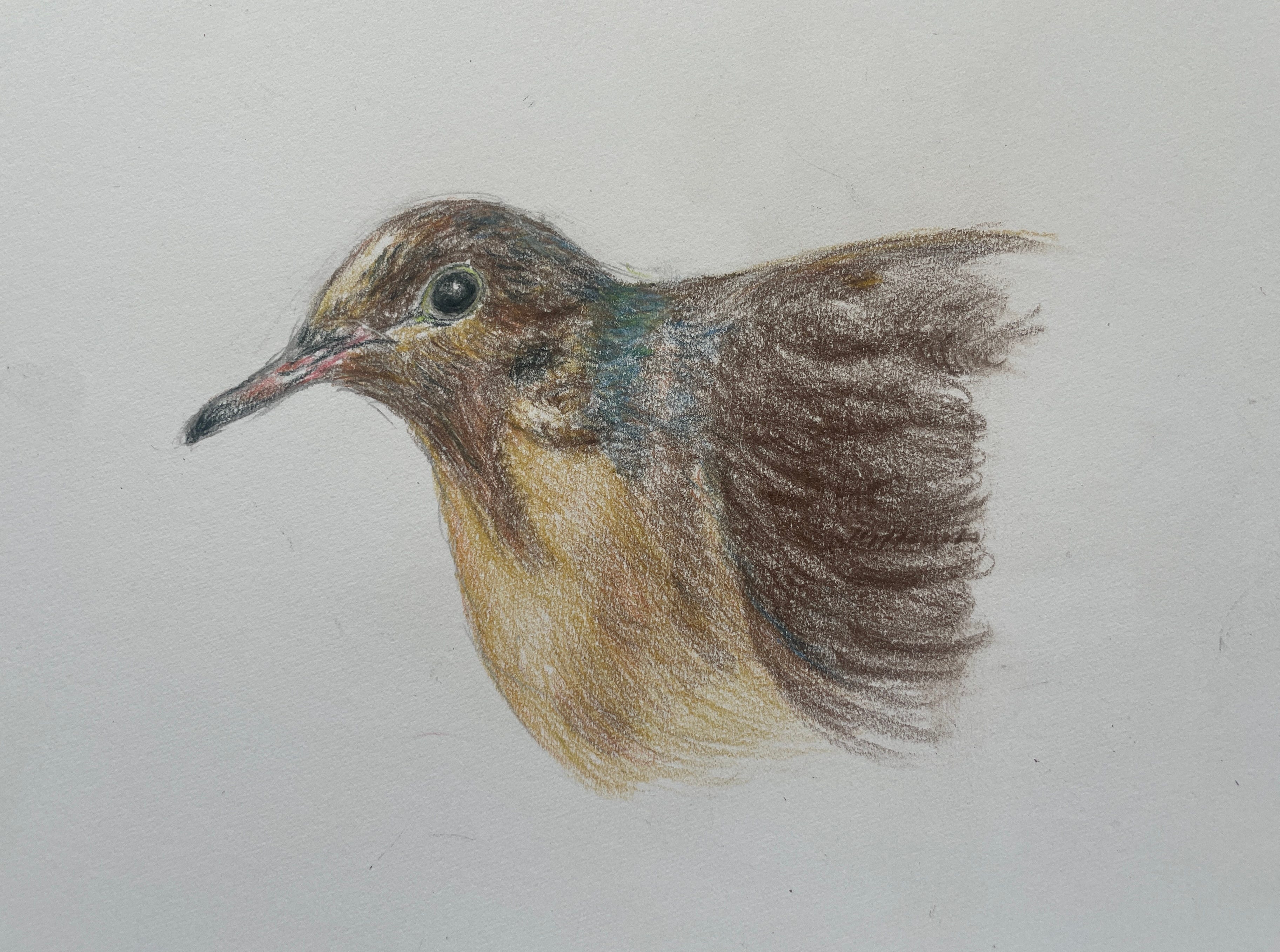
This is, broadly speaking, the subject of my next book. I take the idea of an endling, the last of a species, such as Northern white rhinos or the Socorro dove. Both of these only now exist in captivity and are extinct in the wild, and the word endling has come to be synonymous with the vanishing natural world and terrible losses that characterise the great “sixth extinction” (in the words of Elizabeth Kolbert). There’s even an indie apocalyptic computer game called “Endlings” where you have to act as custodian for the last vixen in the world, with her three cubs.
The term did not originate to describe species but rather was used by physicians when talking to patients who were the last in their family. The word feels like a charm or enchantment somehow, a magical word, though if it is magic, it feels like a dark incantation. An endling is a being who is alive but also dead.
But endings and endlings feel like a ubiquitous phenomenon. Whether it’s glaciers melting or personal losses, endings surround us. It’s this everywhere-ness of endings, the discomfort they inspire, but also the sense of their necessity and inevitability that intrigues me. And the book will explore endings of many kinds. As I started my research, it quickly became apparent there were too many case studies, stories and ideas to pack into one volume. So as the writing develops, I plan to share thoughts, readings, tales and musings drawn from my research on endling stories.
Whilst the book is not just about species endlings, I will start with an animal extinction as an example of some of the themes that inhabit the book and the ways I want to talk about endings. It’s an ending I first encountered while writing my first book, Bothy: that of the great auk. Like the more famous dodo, the great auk was hunted and harassed to extinction by humans. These large, flightless seabirds could grow up to about 85 cm tall and had heavy, hooked beaks. Their bellies were white, their backs black, and in between the eye and the beak was a recognisable white oval patch. They were long prized as a food source and were of symbolic cultural importance for many communities, but as egg collectors sought to gather up rare specimens and as the birds were hunted for meat and feathers in unsustainable ways, their numbers declined. By the early decades of the nineteenth century, it was clear the great auks were much less numerous than they once were, and when the rock that housed the last colony, Geirfuglasker off Iceland, was submerged after a volcanic eruption, the remaining birds sought refuge on Eldey. Here they would meet their end.
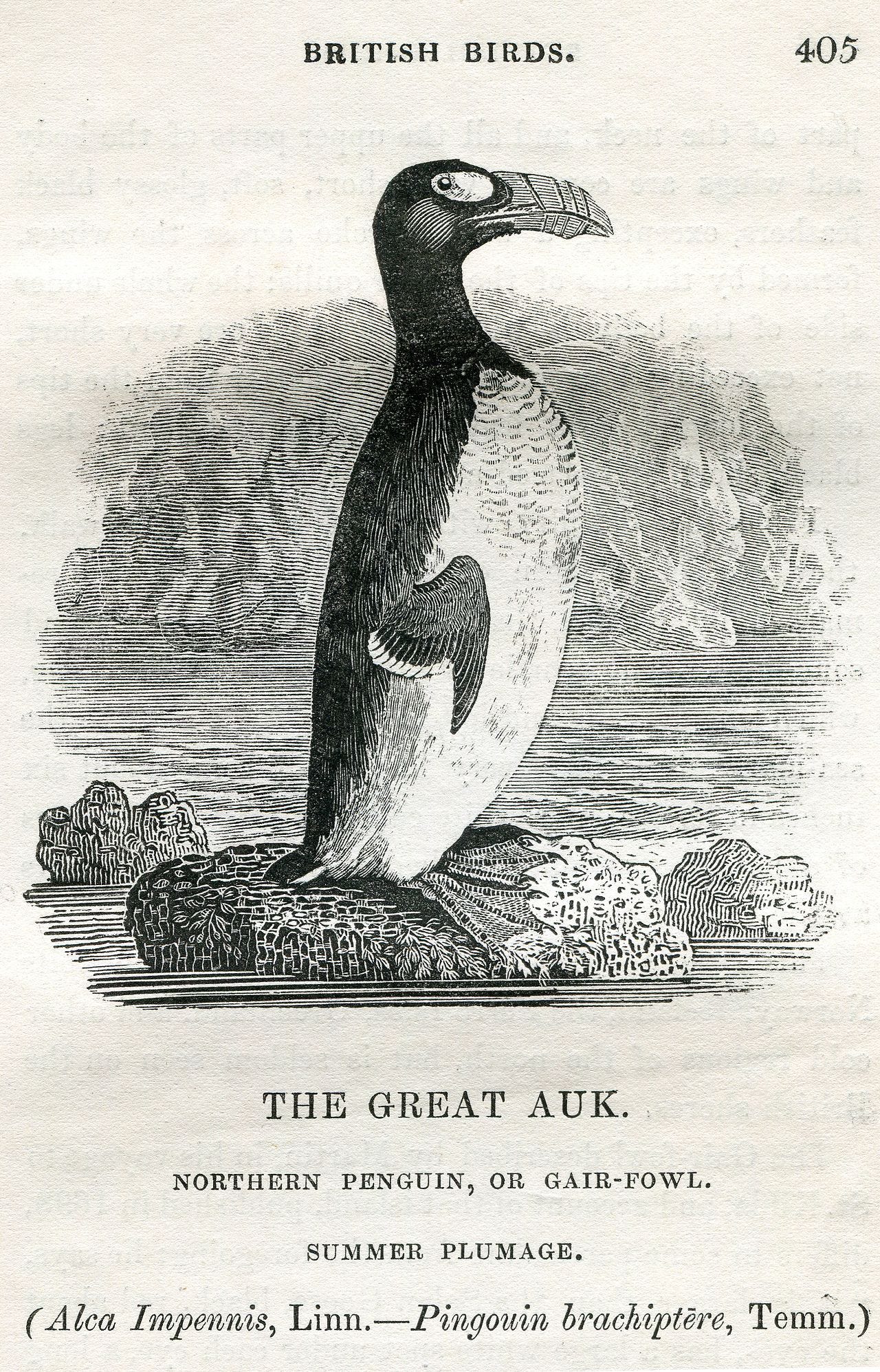
No one knows exactly when the last great auk was killed, though the famous story is that the last pair were slaughtered on Eldey in 1844 and the final egg smashed or broken somehow - as the work of anthropologist Gísli Pálsson has shown the sources don’t support the neat tale that is often told and there is more myth than reality here. When naturalists John Wolley and Alfred Newton visited Iceland in 1848 in to try and catch a sighting of the bird, all they found were stories and empty rocks. It became clear that the great auk was no more, extinguished by human hands. Wolley’s Gare-Fowl Books, 900 pages of notes and observations studied extensively by Pálsson, are a testament to these last tales of the great auk. Sightings were reported for several years after 1844, most apocryphal or mistaken, though possibly one lone great auk was seen in 1852.
I have visited the place where one half of what was probably the last breeding pair of great auks on British shores was shot in 1813. On the steps of Fowl Craig on Papa Westray (Orkney), the King, the male, was shot by a local man, William Foulis, for a collector called William Bullock. The Queen, the female, was supposedly stoned to death as she sat on her nest. With bitter irony, a visitor called Reverend Low on the search for eggs and specimens, who visited with his gun, commented, in the same year that the King was killed, that he had often enquired about the great auk but had not found it here.
These tales of the final moments of living things are dramatic and make for compelling stories, but as scholars such as Pálsson have shown, they are the culmination of longer processes of destruction and violence. No one would have known that the auks on Papa Westray were the last breeding pair in Britain when the male was shot, but the bird’s death sentence had been signed, and though there were a few more sightings of great auks around British waters, the bird was gone. Now all that’s left on Papa Westray is a newly unveiled bronze monument on the rocks and a display in the Stromness Museum, fading in a case, a monument perhaps to ‘unrepeatable and irreversible time’ (Svetlana Boym).
The tragic story of the great auk brought home to me the reality of human-caused extinction and also the complex meanings that attend an ending. The flightless bird was in trouble long before the final pair disappeared, so when does something end? How do we measure the beginning of the end? And what does it mean or matter? The great auk no longer lives; the rocks on which it gathered are emptier. But what import does this have, and why should we care? Can we do anything about endings, and if so, what? If we protect species, how do we go about this, and what decisions do we make about what should be saved and what we must let go? It’s too late for the great auk, but it lives on in memories, images and literature. So, how do we remember things that are gone? Do we try merely to catalogue them or resurrect them?
Part of the joy of a project such as this is the many collaborations it necessarily involves. In the course of thinking about endings, extinctions and loss, and specifically great auks, I have encountered the work of artist and animator Sean Harris, who collaborates with Pálsson to tell the story of the great auk and its extinction. Through shadows, light, image, and sound, he has developed a way of reanimating the great auk, the visual projections giving movement and life to the bird and its histories. His work is a poignant evocation of how we might try to remember and make meaning out of endings. The “echo machines” he creates are a form of de-extinction, but a radically different one from the efforts of Colossal, the genetic and biosciences firm, who claim to have raised the dire wolf from the ashes.
Some say that we should be trying to resurrect animals that are gone, others that humans should go extinct and should quit the planet entirely for the good of the living world. What endings do we accept? Whose deaths or lives do we value?
These are themes threaded through the book and my research, questions without easy answers.
As I worry about the ash trees in my garden, which I think might be suffering from dieback or consider my parents getting older, my life changing, I try to make sense of, accept and process these possible endings. I ask myself questions we must all face. The book is, at least in part, my attempt to think through what answers we might give.
I return to Vermeersch’s poem.
We are born,
and our births are lost. We can’t go back to them.
Each embrace ends with an ending. When we become,
what we once thought we’d be is lost. We keep becoming.
Reading and resources
Jeremy Gaskell, Who Killed the Great Auk?
Sean Harris’s website: https://echo-maker.com/
Gísli Pálsson, The Last of Its Kind: The Search for the Great Auk and the Discovery of Extinction
Paul Vermeersch, The Reinvention of the Human Hand