
Shadow and light
Seeing ghosts in the mountains

It starts as the faint suggestion of a rainbow in the sun-lit mist below us. The world is white and grey and silver, the recent snowfall covering the mountains and the village of Balluchilish below, but this little patch of air shimmers with a translucent iris glow.
The light takes shape, the colours connecting in a circle of light. And it’s not a rainbow, we realise, but that most ethereal of mountain mirages, a Brocken spectre surrounded by an iridescent glory. Slowly the shadow-creature reflection of myself is projected into the centre of the orb, impossibly large and untethered, waving back when I do, but also moving without my bidding as the wind ruffles the misty clouds.
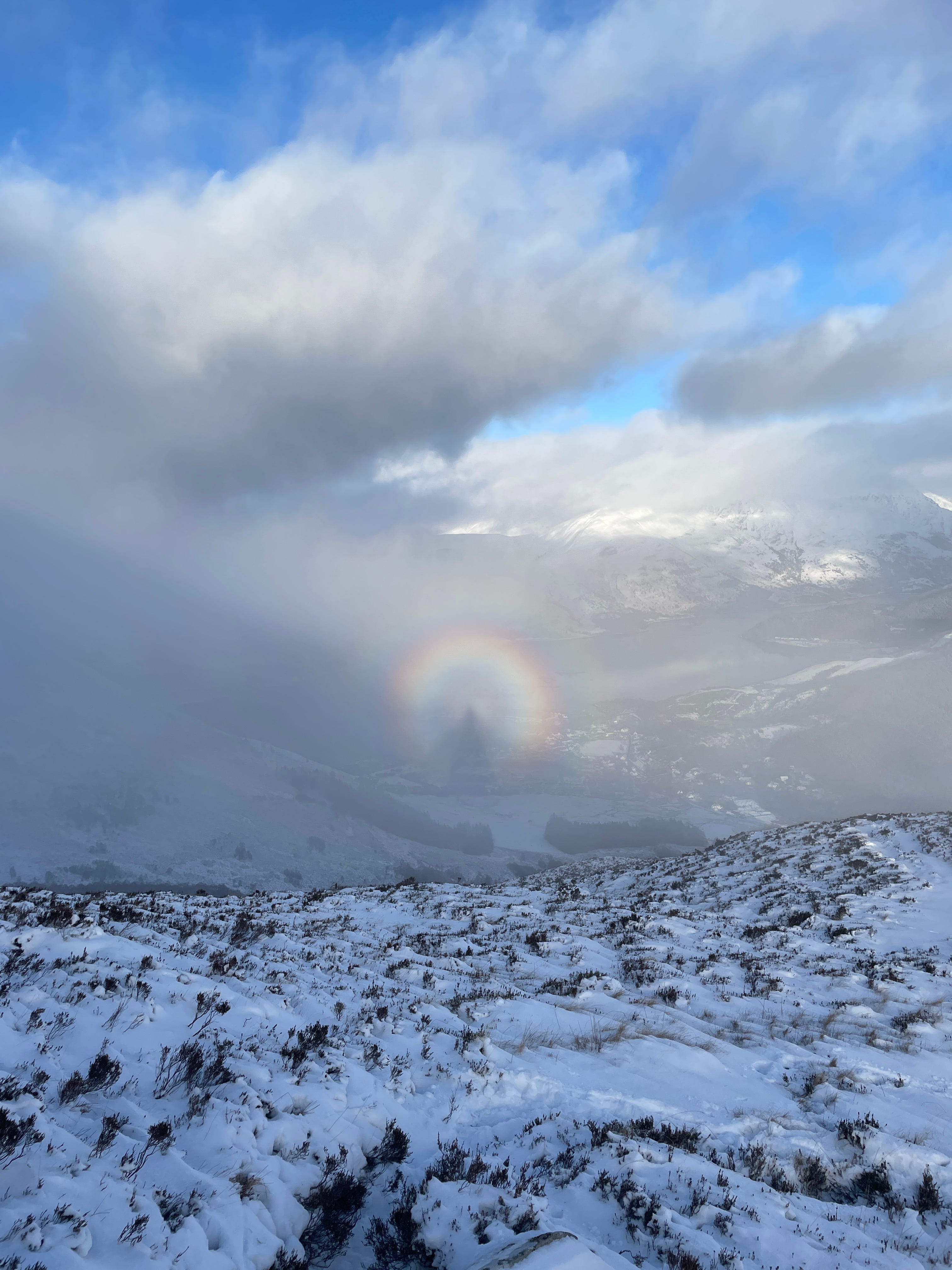
As any good hiker knows, a Brocken spectre is a special sight if you are lucky enough to see one. Stand with the sun to your back, on the side of a mist shrouded mountain, and the spirit may appear. The magnified shadow of the observer is visible on the clouds, projected by the bright sunlight, and it seems impossibly large because the human eye is tricked into thinking that the shifting shade is the same size as the mountains and lochs visible behind. We are also lucky enough to get the shimmering rainbow-coloured rings, known as a glory, caused by the backward scattering of light by individual droplets of water. It’s an otherworldly sight, magical, uncanny, unsettling and beautiful all at the same time.
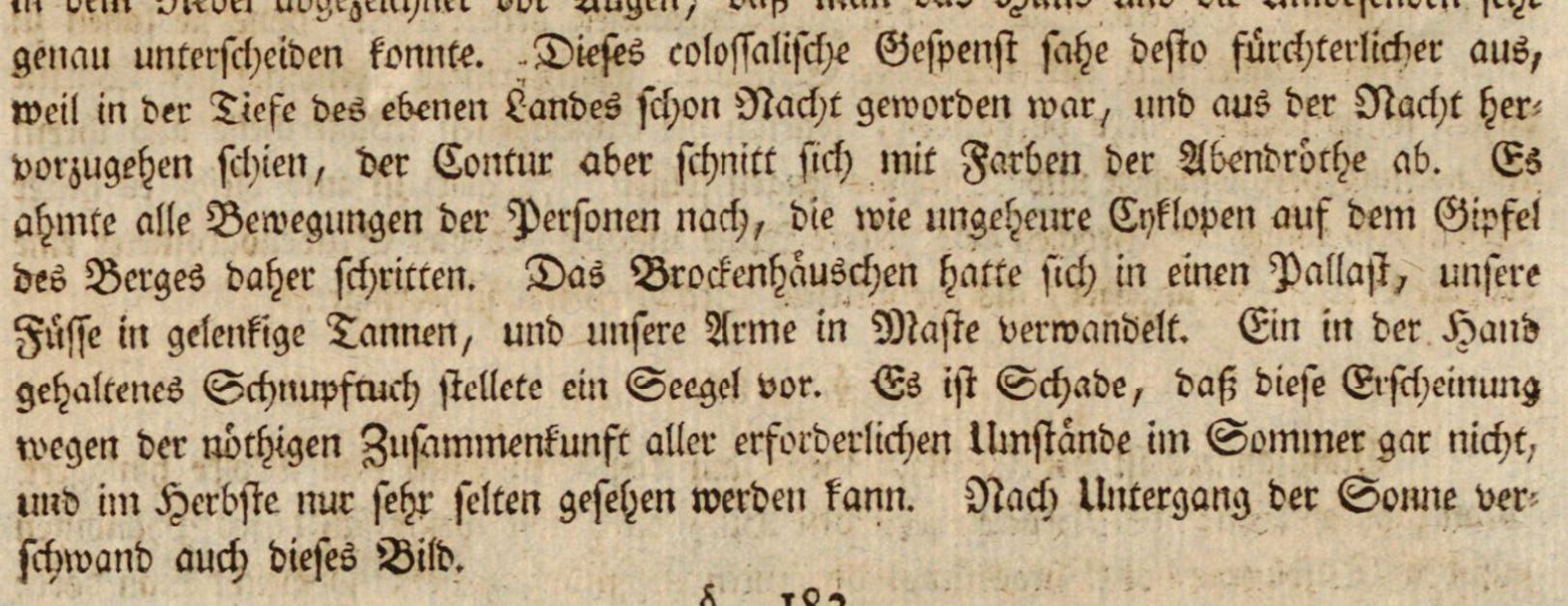
And as any good historian knows, the Brocken mountain, from which the phenomenon derives its name, is a place long associated with spirits and witchcraft. Located in the Harz region in Germany, the Brocken is the peak on which witches revel on Walpurgis night in Goethe’s Faust. It’s also a great spot to see the shadowy reflections, shrouded in mist 300 days of the year. The phenomenon of the Brockengespenst was famously first described and explained by Johann Esaias Silberschag in 1780. A Lutheran pastor who was trying to reconcile the wonders of the natural world with theology and his faith in God, Silberschlag described a wondrous Brocken sighting. It appeared as a ‘colossal ghost’ (colossalische Gespenst) and the feet of the group seemed like large ‘fir trees, and our arms turned into masts. A handkerchief held in his hand looked like a sail.’
Shadows and shapes haunt the mountains everywhere, threaded through men's and women’s accounts of being in the hills. There’s something about the sound, the dark and the light, the immensity and the intimacy of being in these places that encourages us to experience things at the edge of perception and understanding.
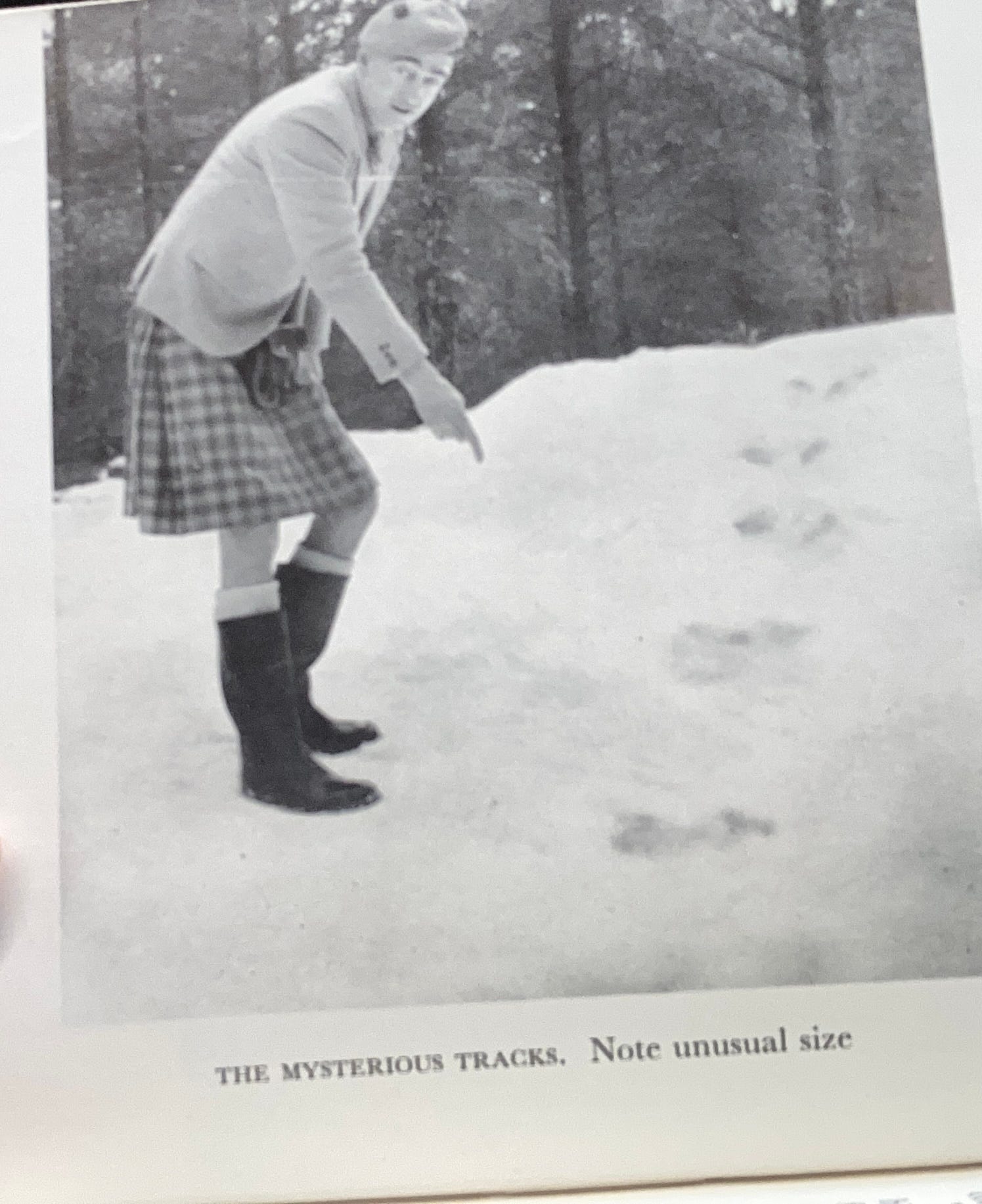
In the Cairngorms, experienced climbers swear that they have had encounters with the Grey Man, Am Fear Liath Mòr, a strange figure who stalks the glacial valleys and high peaks. There are plenty of mentions of him in the bothy books left in Corrour and of other strange spirits. It’s not an old legend, that of the Grey Man, but it seems to have emerged out of the unsettling experience of being out on the plateau in howling winds, in the dark, in the snow. I am not sure I believe it’s an actual being, maybe it’s a kind of Brocken that people see, or maybe there’s another explanation. But many hikers swear they have seen him stalking them, making footprints on the cold ground.
Photographer John A. Rennie supposedly saw these footprints in the Spey Valley, measuring almost half a metre in length. He even published them only later to find out that the indents occurred naturally when rainfall eroded the snow.
Whether you believe in the Grey Man or not, whether you, like Silberschlag, believe that the natural wonders are proof of God’s immanence, I love this idea of things being there and not there all at once, and of the way people’s experience in high places flirt with the uncanny, the unseen and the unknown. It’s reflected not just in people’s connection to the mountains and the landscapes, in the strange things they see, or think they see, in the in-between space of twilight or dawn, but also in the bothy, surrounded by the absent presence of other users before them.
In 1930 an anonymous visitor to Corrour found the bothy ‘silent and empty’, his thoughts drifted over the mountains, as the wind sighed and the Dee babbled.
“You realise how many more things one sees and hears in the hills alone. As I read this book the shadowy outline of past visitors seem to hover above me then slowly fade.”:
The shades of people before are his companions, serried ranks alongside the Brockens and the silhouettes and the grey man spirits.
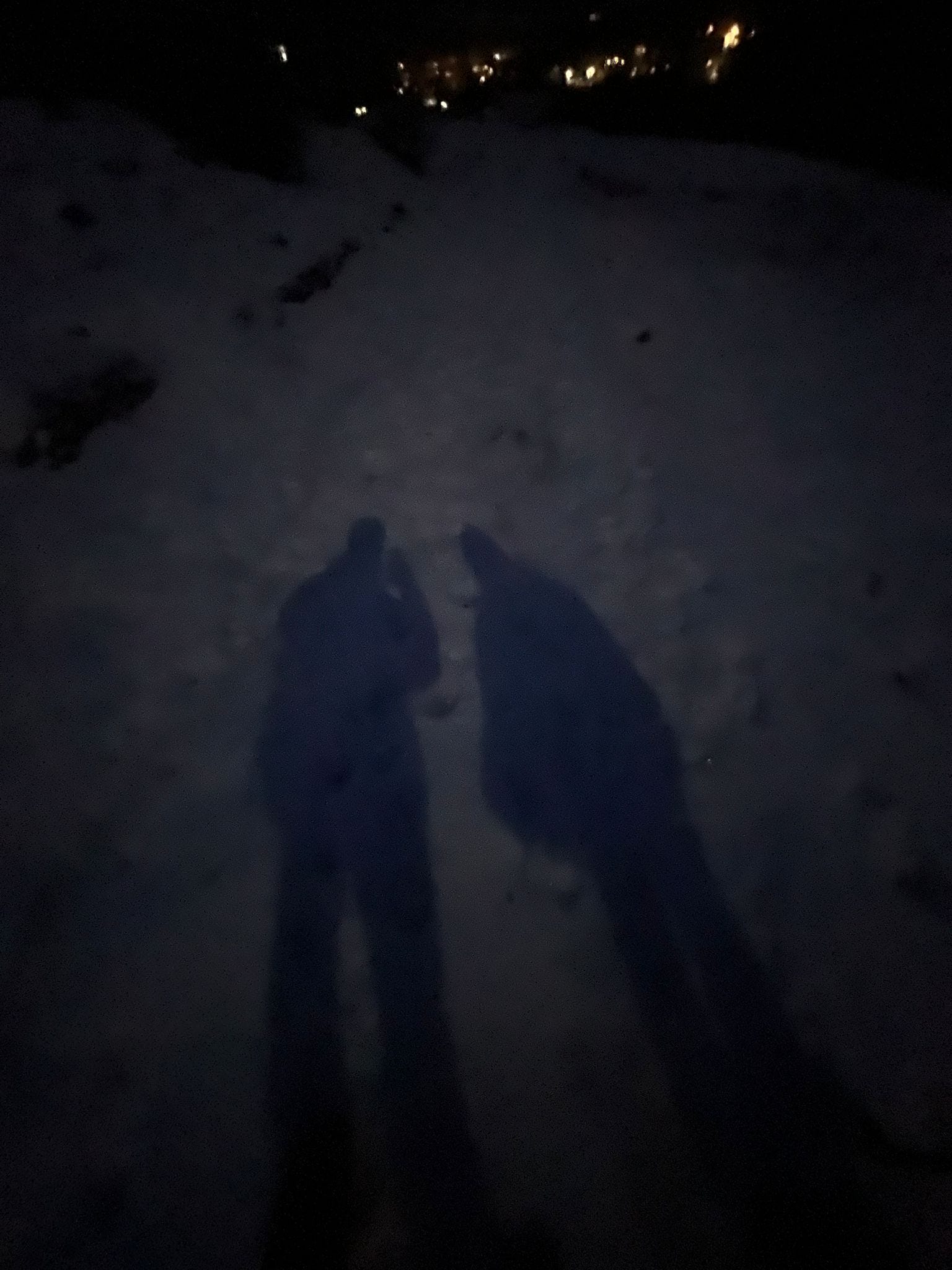
We don’t summit that day. A little tired and a little nervous of the ice we descend the way we came, but this time in the near dark. The moon is bright, the snow reflecting its shine, with even the occasional lunar-lit sparkle glistening below our crunching feet. No Brockens on the way down in the darkness but it is so light still there are moon shadows. We pause for a moment in the ethereal blue glow at the bottom of the mountain and watch our long silhouettes picked out on the ground as if the Brocken spectre had fallen from its high rainbow perch to rest on the white, white snow. shadow friends on the mountain
.