
Empty pages
Creative endings and the First World War

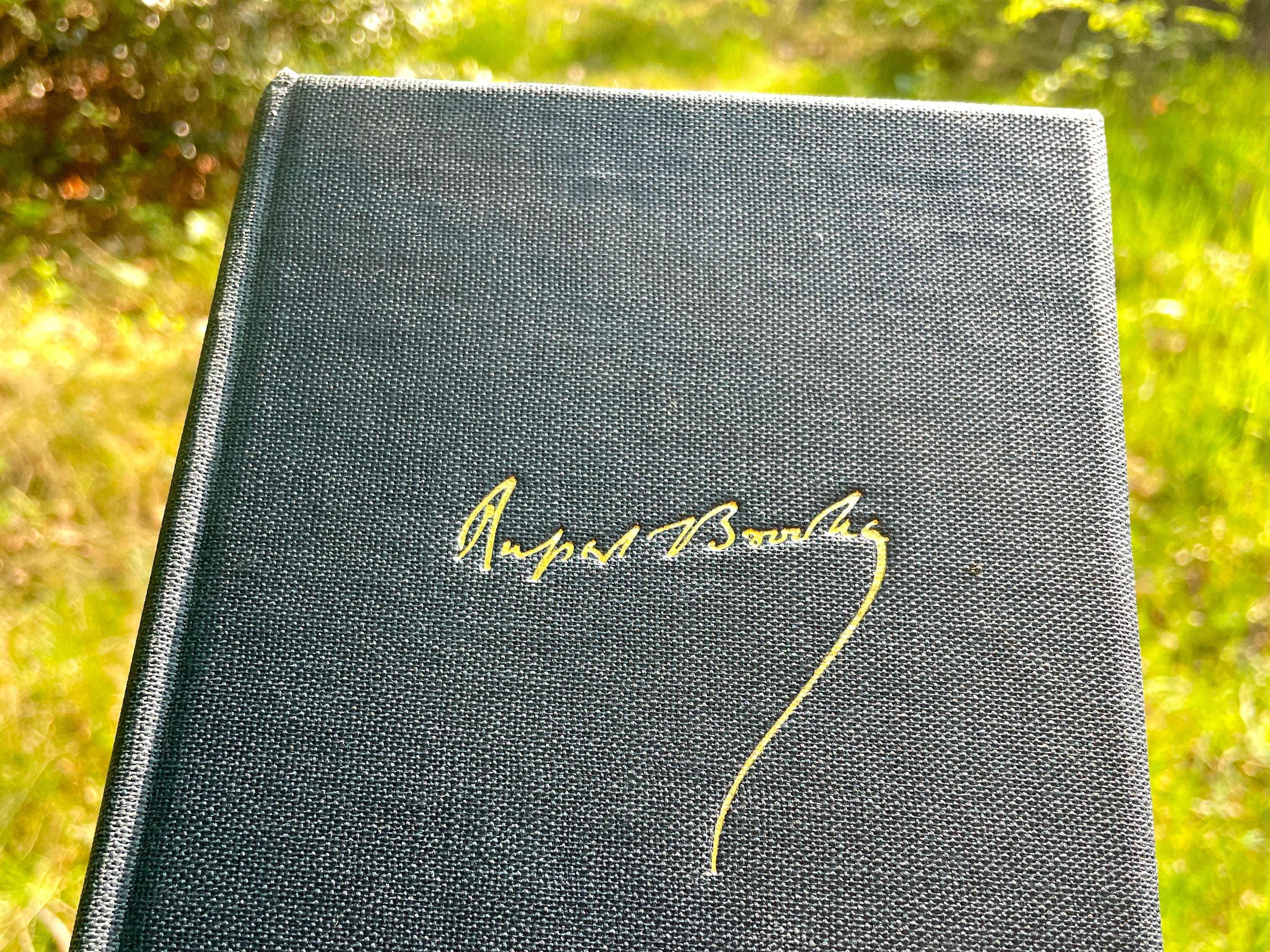
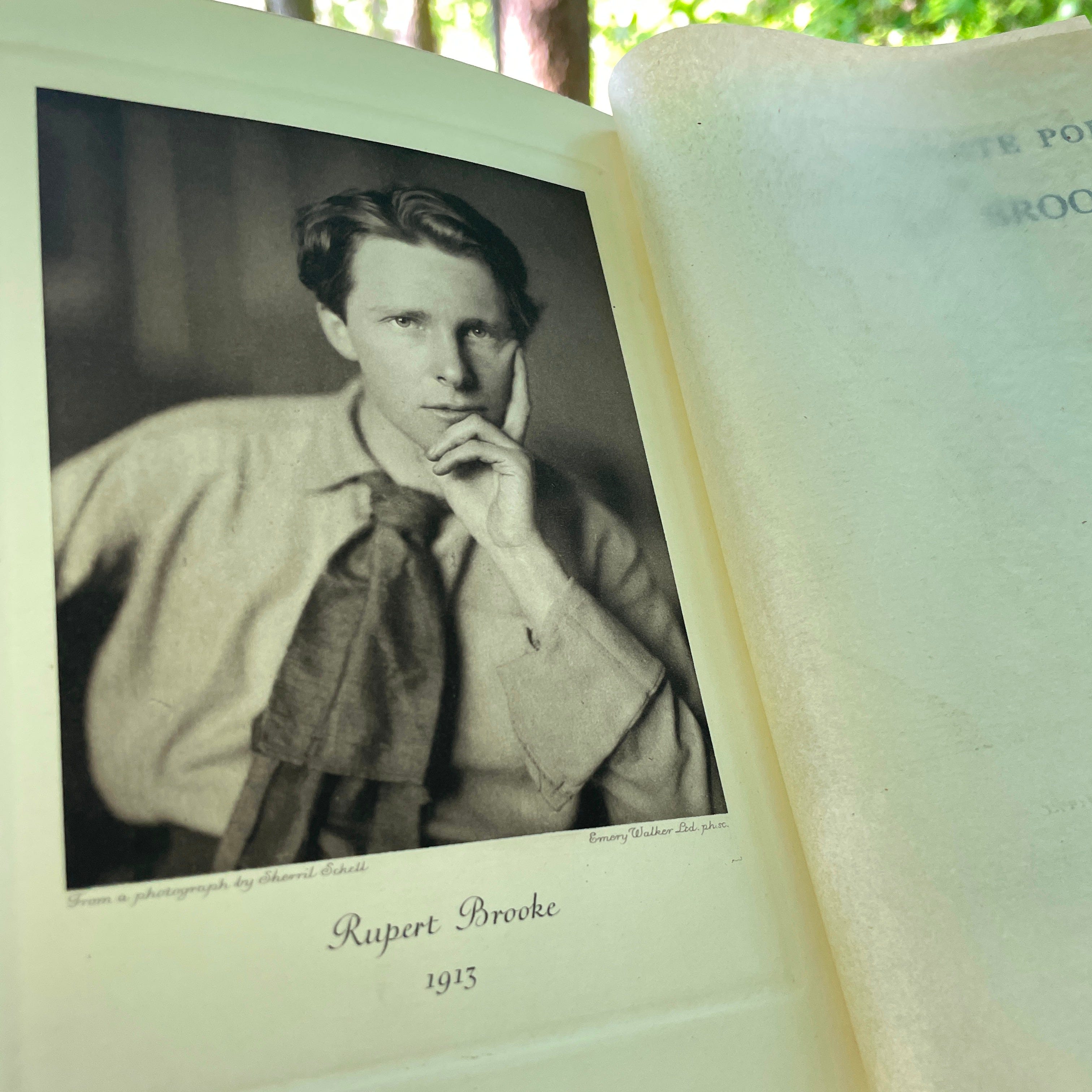
A few weeks ago, I picked up a second-hand edition of Rupert Brooke’s poetry. It’s a lovely volume, with a photograph of the writer, protected by that beautiful soft tissue paper old books have. I turned quickly to a verse I know well, ‘The Hill’, as I remember performing it for an acting exam once.
Brooke is often called a war poet, and ‘The Soldier’ is perhaps the most famous of all poems associated with the First World War.
If I should die, think only this of me:

      That there’s some corner of a foreign field

That is for ever England.It’s full of the hope and patriotism of young men going off to war before the full horrors of the trenches, the mud, blood, guns and rats became apparent. Brooke would never see any of this, though. On the way to the Dardanelles in 1915, he died on a ship in the Aegean Sea, succumbing to dysentery and blood poisoning from a mosquito bite. He will forever be the dashing young man, in love, hopeful, filled with vitality. True to his poem, he is buried in a foreign field on the island of Skyros, Greece, surrounded by olive trees, and his friend Frederick Septimus Kelly wrote that Brooke was like ’Keats, Shelley or Schubert, who are not suffered to deliver their full message.’
We are often obsessed with creative endlings, the last acts, works, paintings, words, as if they might convey a deeper message or higher truth. Or maybe we are drawn to them just because they feel painfully poignant.
Brooke is amongst that Lost Generation of young men killed in the First World War, a war that lives on in popular memory as a tragedy of youth cut short, of lives wasted, futures erased. And because so much poetry came out of the war, there’s a creative dimension to the sense of loss that the conflict evokes. Some men like Brooke died before they could communicate their ‘full message’, before they even made it to the front. Others like Wilfred Owen perished just a week before the Armistice, leaving behind a body of work that feels powerful because he so nearly made it out of the war alive.
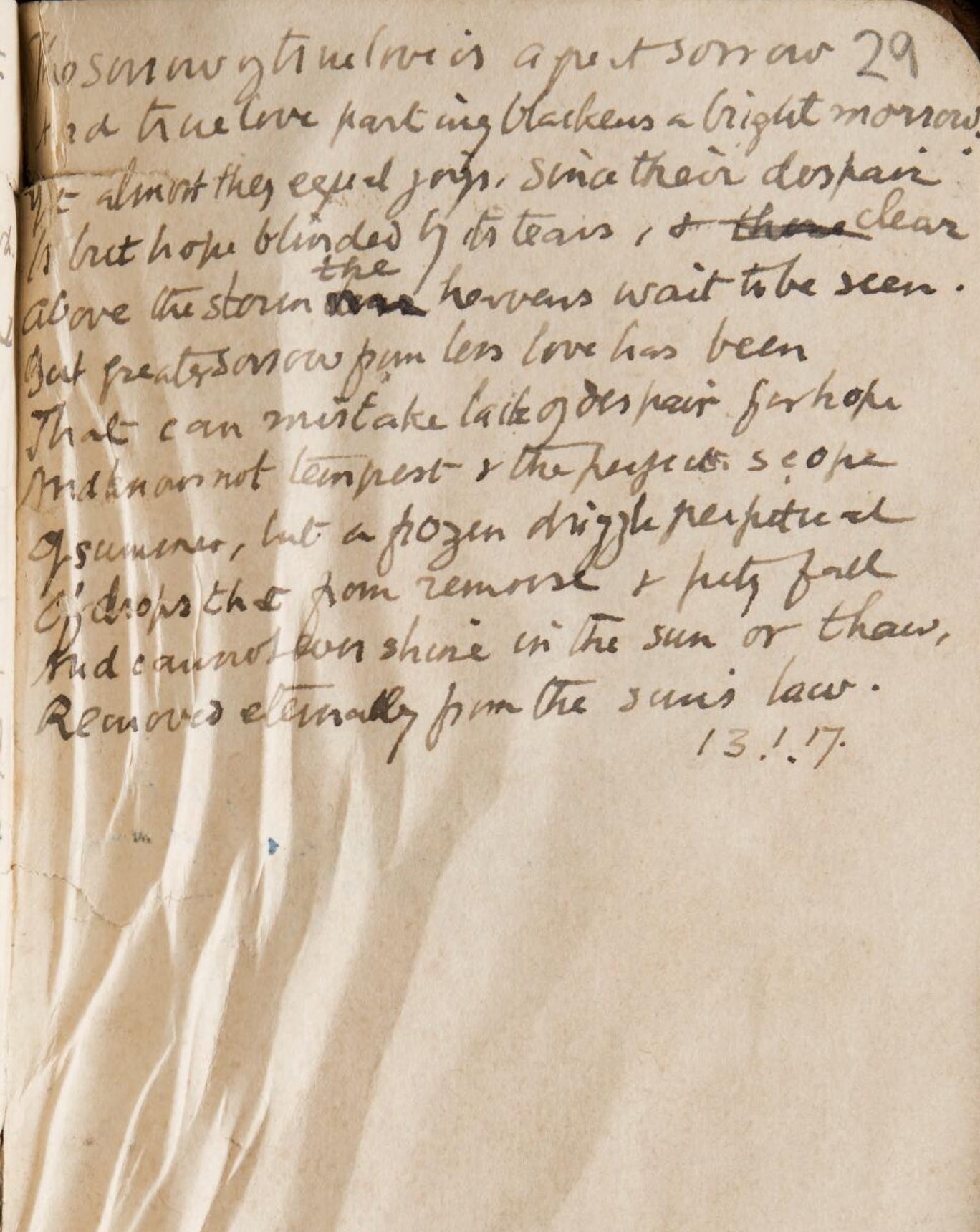
In the National Library of Wales, there’s a diary with blank pages at the end. It belonged to Edward Thomas, born in London but of Welsh parents and a man who considered Wales his spiritual home. He was a writer who penned volumes on nature and walking, but only came to poetry later in life. In 1915, at the age of 37, he volunteered for the army, and in 1917, he was sent to the front. Within three months, Thomas was dead, his lungs compressed by a German shell passing close to him during the Battle of Arras. The strange pressure of the shell creased the pages of his diary, a diary with unfinished draft poems and empty pages which would never be filled.
But it was not just writers whose creative lives were cut short.
In 1913, just before he went to war, artist Franz Marc painted an image of animals caught in the jagged, chaotic lines of what seems to be a forest exploding in colour, fire and blood. He scribbled on the back, “Und alles Sein ist flammend Lied” – “And all existence is flaming suffering.”
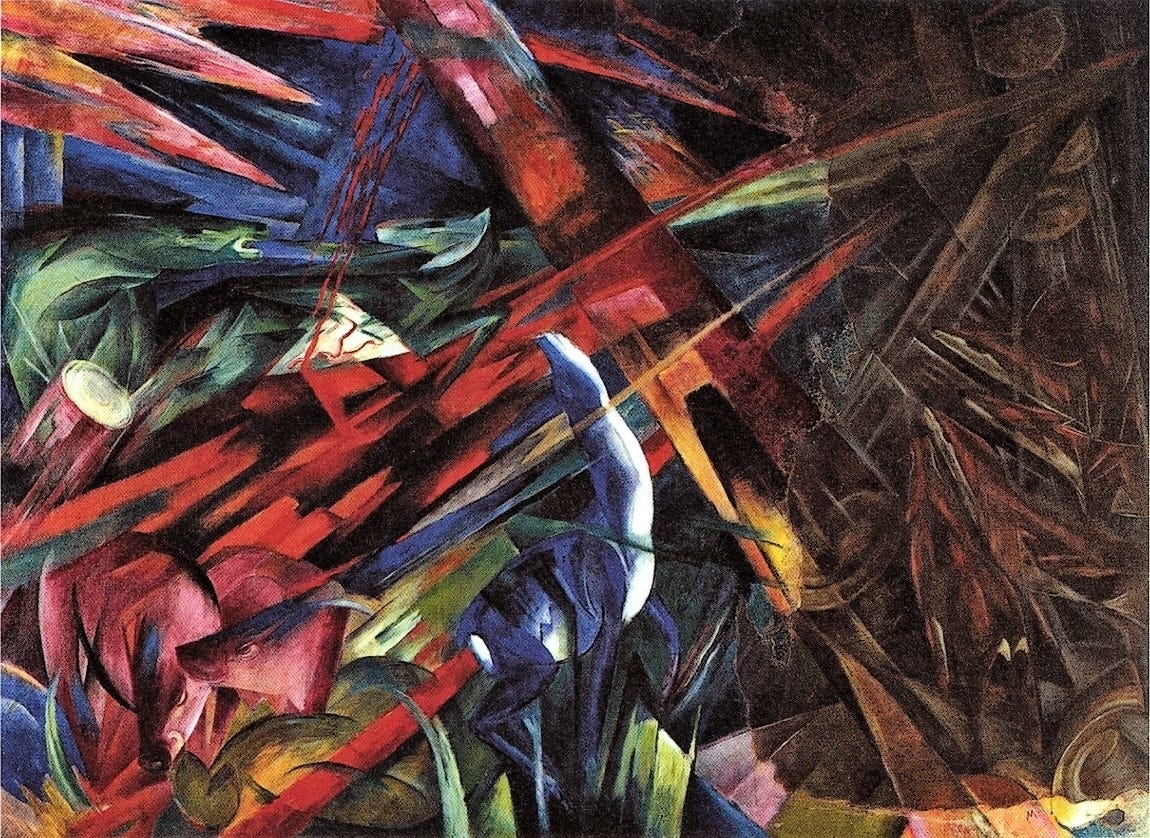
It feels a fitting resolve, this prophetic work of a tortured and fractured landscape. The apocalyptic imagery foretells what is to come, as if Marc had seen a vision of what bombs and explosions might soon do to the world. Marc enlisted in the German army in 1914, where he put his skills to use by painting covers for artillery, all the time writing to his wife about his sense of the world as ugly, impure. It is this sensibility that seems to shape the work he painted before he went off to war, though perhaps it does so unconsciously. Seeing a postcard of the work sent to him in March 1915, he writes that it feels like a premonition and that he grasped something in the hazy imagery, ‘although hidden from me at the time.’
Marc would never paint again as an artist, for he was killed at Verdun a year later. His last letter to his wife, two days before his death, cannot help but be run through with exceptional poignancy. He writes, ‘Stay calm and don’t worry; I am coming back to you - The war is going to end this year.'
Painful as these words are, it is the painting, even more than the letter, that seems to speak to the tragedy of his creative end.
I am still working out what to do with this sense of an ending that seems so powerful in creative last acts. But I’ll conclude with lines from Thomas’ final unfinished poem.
The sorrow of true love is a great sorrow

And true love parting blackens a bright morrow
Reading and resources
Carel Blotkamp, The End: Artists' Late and Last Works
Matthew Hollis, Now All Roads Lead to France: A Life of Edward Thomas
Nigel Jones, Rupert Brooke: Life, Death and Myth
Stuart Lee, The Last Days of Wilfred Owen (blog)